
.svg)
Canadian vs US tech salaries: the 40% cost gap nobody talks about

A software engineer in Seattle costs $222,000 per year. The same engineer in Vancouver costs $121,000. Same skills, same timezone, same work culture. Half the price.
The salary gap is real, measurable, and largely ignored. Canadian tech talent is the biggest value opportunity in nearshore hiring. Yet many U.S. companies still choose offshore outsourcing or costly domestic hiring. The question isn't whether Canadian developers are cheaper. It explains why the gap exists, if quality drops, and how to save money without heavy cross-border compliance.
The salary gap is 40-46% across all roles
Tech salaries in the U.S. are nearly 50% higher than in Canada. U.S. tech workers earn 46% more on average (Toronto Metropolitan University Dais). The gap holds across cities, roles, and experience levels.
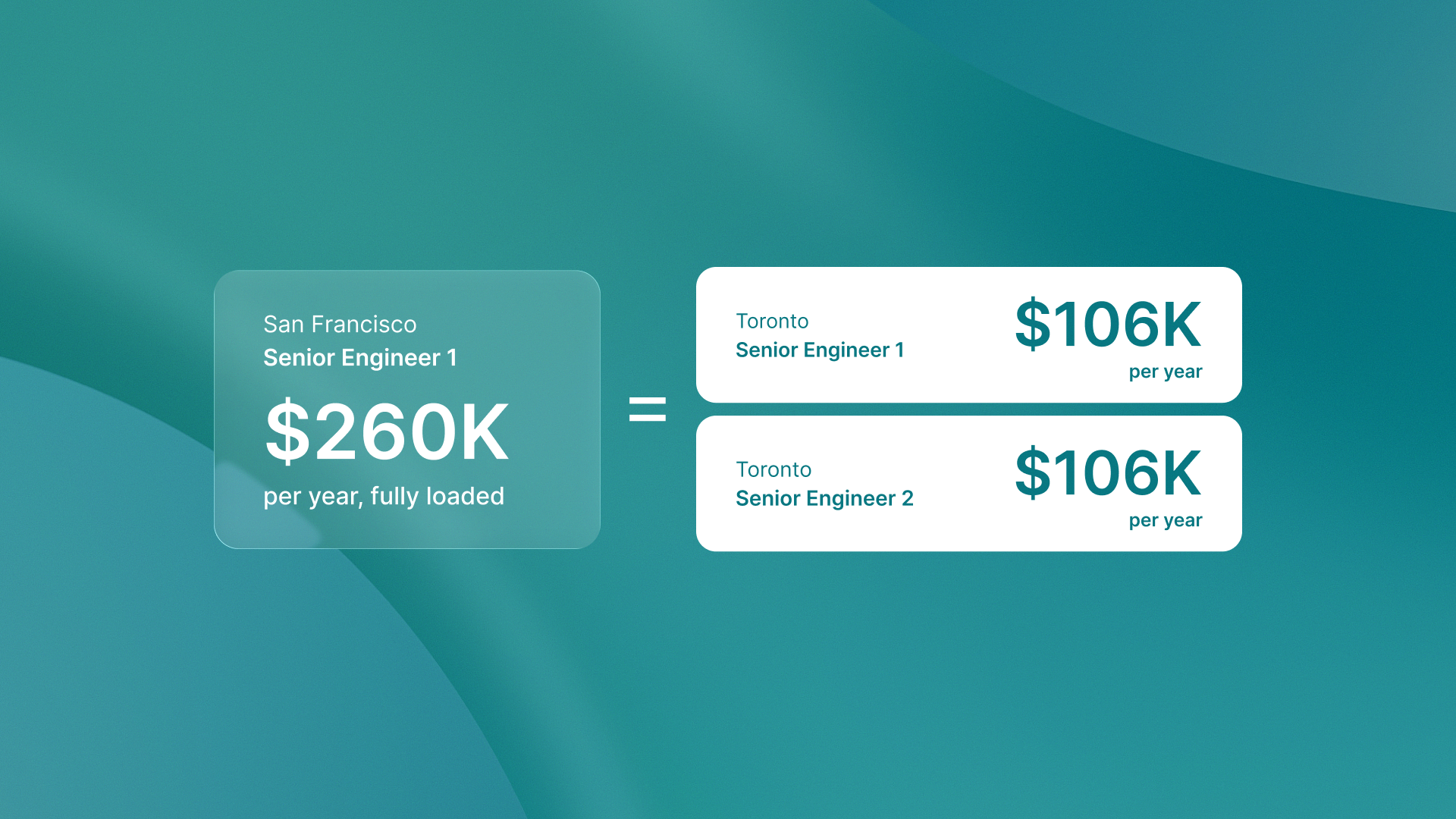
A software engineer in Seattle earns $222,000 annually while a Vancouver counterpart earns $121,000 (The Logic). Toronto software engineers averaged $106,000 in 2023 compared to over $260,000 in San Francisco (CBRE Scoring Tech Talent Report). The pattern repeats for backend engineers, frontend specialists, DevOps roles, and engineering managers. Canadian compensation sits at roughly 54-60% of U.S. equivalents.
Where the savings land by city
The three major Canadian tech hubs offer distinct cost profiles and specialization strengths. Toronto software engineers average $106,000, making it ideal for fintech and enterprise SaaS hires. Vancouver gaming and mobile development talent comes in at $121,000 for senior engineers. Montreal AI and machine learning specialists cost less than both. They benefit from strong university pipelines at McGill and Université de Montréal.
Each city delivers the same 40%+ savings against U.S. comparables, but with different ecosystem strengths. A VP of Engineering hiring for a fintech product should look at Toronto first. A gaming company scales faster in Vancouver. An AI startup finds deeper bench strength in Montreal.
The quality question: why Canadian talent costs less
The salary gap exists despite equivalent or superior technical skills. Canadian universities produce high-quality computer science graduates from Waterloo, UBC, and McGill. Many Canadian developers study at the same schools as U.S. developers. They work for the same global tech companies. They also contribute to the same open-source projects.
The salary suppression comes from market dynamics, not talent quality. Canada's venture capital ecosystem is smaller, so fewer companies can afford Silicon Valley compensation. The cost of living in Toronto and Vancouver is lower than in San Francisco or New York, even with housing costs. The Canadian dollar trades at roughly 70-75 cents to the U.S. dollar, creating immediate currency arbitrage.
For U.S. companies, hiring Canadian developers gives you high-quality talent at offshore prices. You also avoid time zone gaps. You avoid cultural issues. You avoid quality problems that are common with traditional outsourcing.
Total compensation differences widen further
Base salary tells only part of the story. Total cost of employment diverges even more when factoring in benefits, equity expectations, and employer tax burdens.
Benefits and equity expectations
U.S. tech workers expect higher equity packages. A senior engineer in San Francisco typically negotiates 0.1-0.5% equity in a Series B startup. The same role in Toronto expects 0.05-0.2%. Health insurance adds $20,000+ in annual employer costs for U.S. hires, while Canadian employees access public healthcare. Payroll taxes vary by province and state, but the gap typically favors Canadian hiring by another 5-10 percentage points.
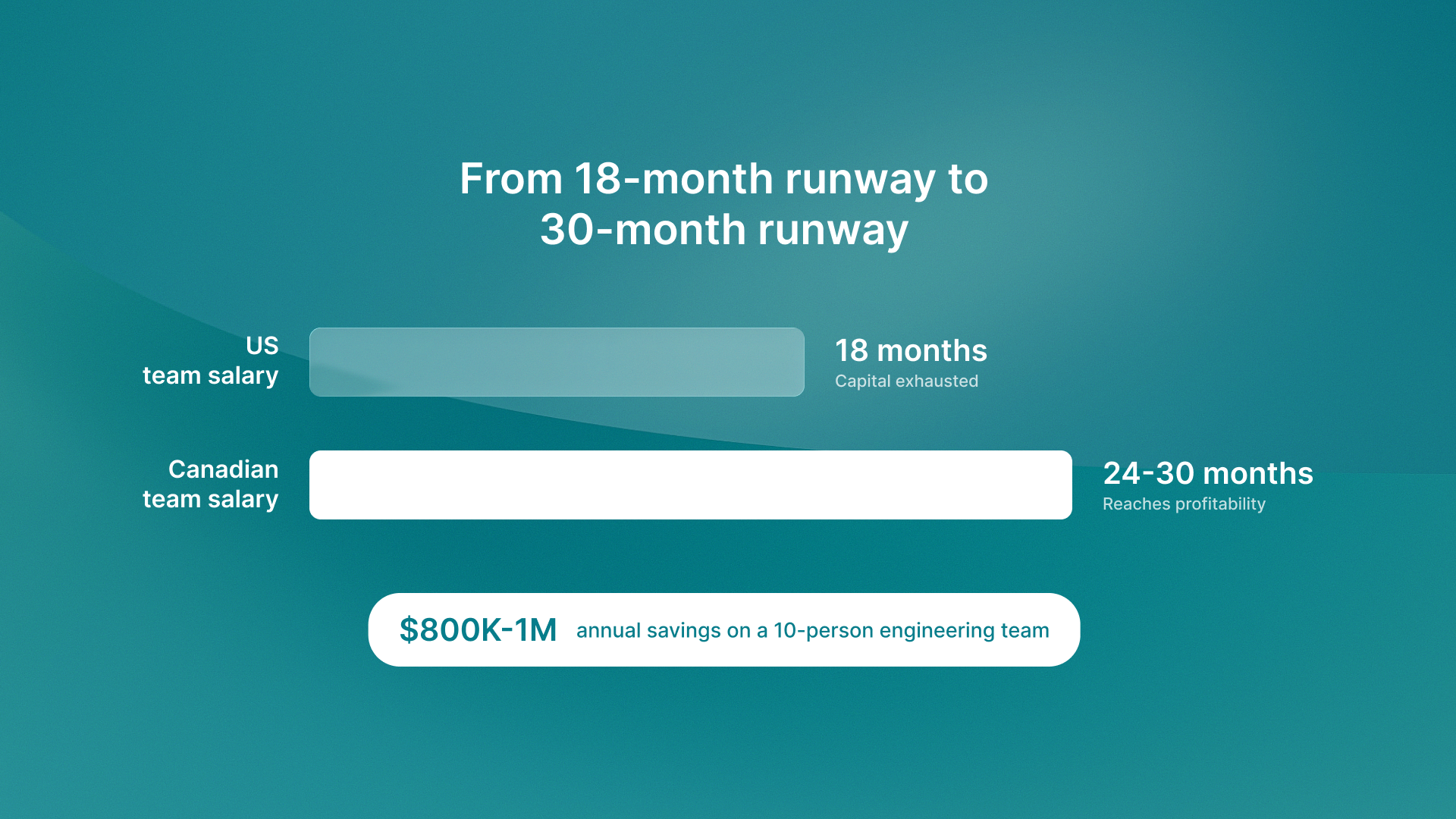
When all compensation factors combine, the total cost of employment gap reaches 50%+ for equivalent roles. A $260,000 San Francisco engineer costs $300,000+ all-in. A $106,000 Toronto engineer costs $125,000 all-in. The savings compound across every hire.
Why more companies aren't doing this
The arbitrage opportunity is obvious, measurable, and accessible. So why doesn't every U.S. tech company hire exclusively in Canada?
The friction point is compliance complexity. Setting up Canadian entities, following provincial employment rules, managing cross-border payroll, and staying tax compliant needs expert help. Most startups lack this in-house. A single misstep in employment classification or benefits administration creates expensive legal exposure.
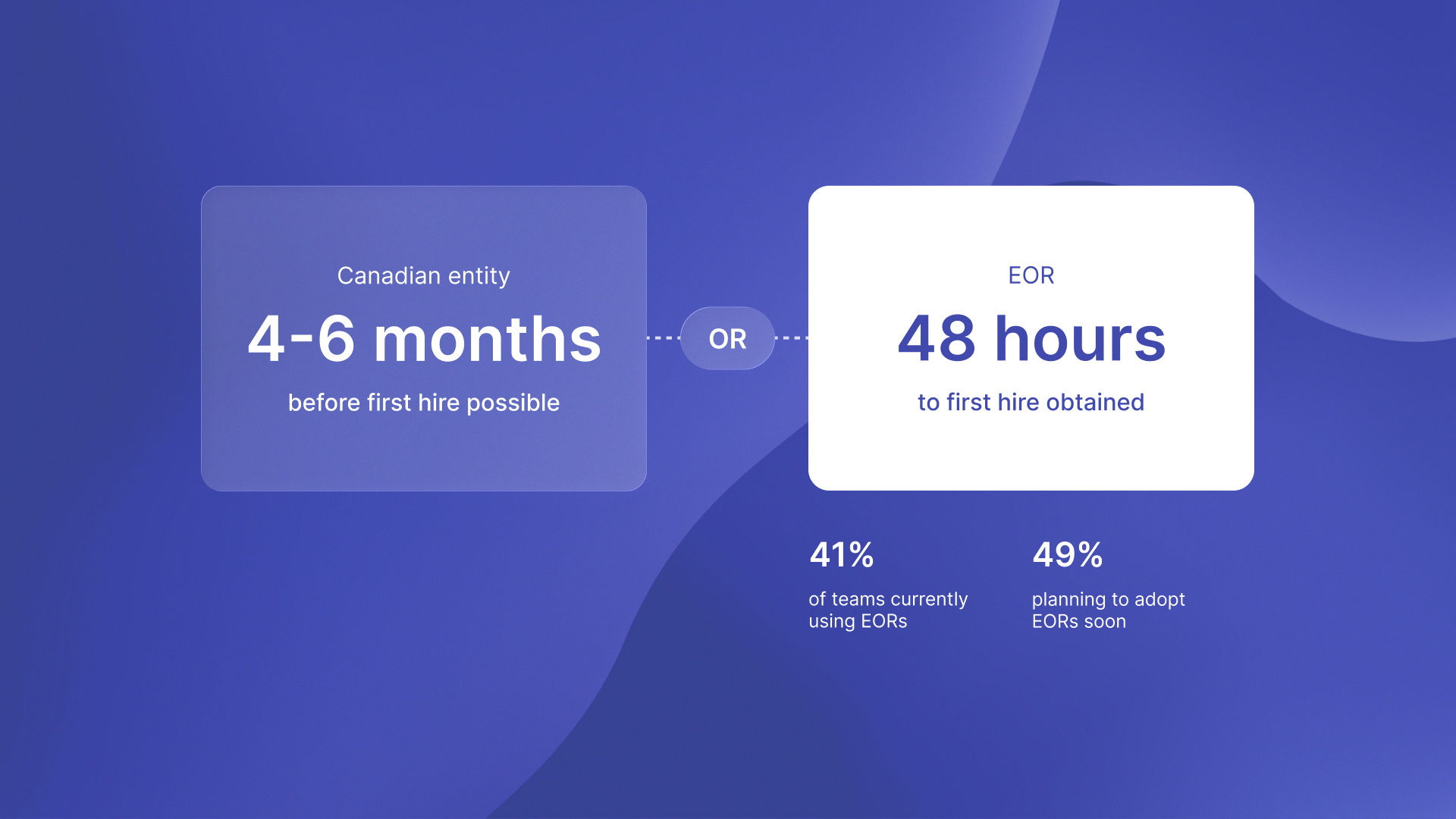
Remote talent platforms and Employer of Record (EOR) providers remove the friction by handling entity setup, payroll, benefits administration, and regulatory compliance. The cost structure remains dramatically lower than U.S. hiring, even with EOR fees included. Companies capture the 40-46% salary savings without building cross-border HR infrastructure.
For venture-backed companies looking to extend runway, Canadian hiring delivers immediate margin improvement. Post-merger integrations can consolidate technical teams across borders while reducing headcount costs. Demand generation teams gain budget flexibility to invest in campaigns rather than headcount.
The numbers that matter
Canadian tech salaries run 40-46% lower than U.S. equivalents for identical roles. Quality and timezone alignment match domestic hiring without offshore trade-offs. Total compensation gap reaches 50%+ when benefits and equity are included. Compliance complexity dissolves with specialized EOR providers who handle cross-border payroll and regulations.
The arbitrage opportunity is real. The only question left is execution. If you are growing a technical team on a tight budget, consider hiring in Canada. The Canadian talent market can save you money.You can get these savings without the downsides of hiring offshore. Start with one role in Toronto or Vancouver, prove the economics, then scale from there.
.png)


.png)




%2520(8).png)